Wall Street's AI Reckoning Has Arrived
Morgan Stanley's top tech banker David Chen told attendees at the firm's Tech, Media and Telecom conference that the software industry is now in "wartime, not peacetime" — a stark signal that Wall Street's AI optimism has curdled into something darker. The vibe shift is real: For the first time, bond investors named an AI bubble as their biggest worry in a recent Bank of America survey, and a speculative essay from Citrini Research and Alap Shah is now circulating among traders, forecasting a 38% stock sell-off within two years as companies replace workers only to watch demand evaporate.
"No one wants to admit it because it's not cyclical," CNBC's Jim Cramer said Friday, linking weak payroll data directly to AI displacement. The theory: companies are cutting headcount faster than new jobs can emerge, creating a feedback loop where displaced workers stop spending and corporate revenues crater. It's not just talk. St. Louis Fed data shows economic output trending higher even as employee headcount flatlines — productivity gains that sound great until you realize they mean fewer paychecks circulating through the economy.
The Market's Schizophrenia on AI
Even as pessimism spreads, some corners of Wall Street are doubling down. Leo KoGuan, a major Tesla backer, bought 1 million Nvidia shares this week, insisting "AI is not a bubble." Marvell stock surged 18% after its CEO pointed to continuing AI demand, asking investors bluntly: "Do you see me blinking?" JPMorgan upgraded Netflix, arguing the streamer is "better insulated from AI disruption risk" — a defensive posture that reveals just how seriously analysts are taking the threat. The contradiction is everywhere: hedge funds are preparing fleets of AI trading bots while simultaneously modeling scenarios where mass unemployment kills consumer spending.
Bloomberg reports that Wall Street now sees AI's "creative destruction" coming not just for jobs but for entire companies. Which businesses survive depends on whether they can cut costs faster than their customer base disappears. PagerDuty CEO Jennifer Tejada said 98% of her developers now use AI coding tools, but she framed it as requiring "flexibility from leadership and workers" — corporate-speak for brace yourself. Meanwhile, Colonial First State, one of Australia's largest pension funds, is rethinking its US tech allocation entirely as AI spending concerns weigh on shares.
What Traders Are Watching
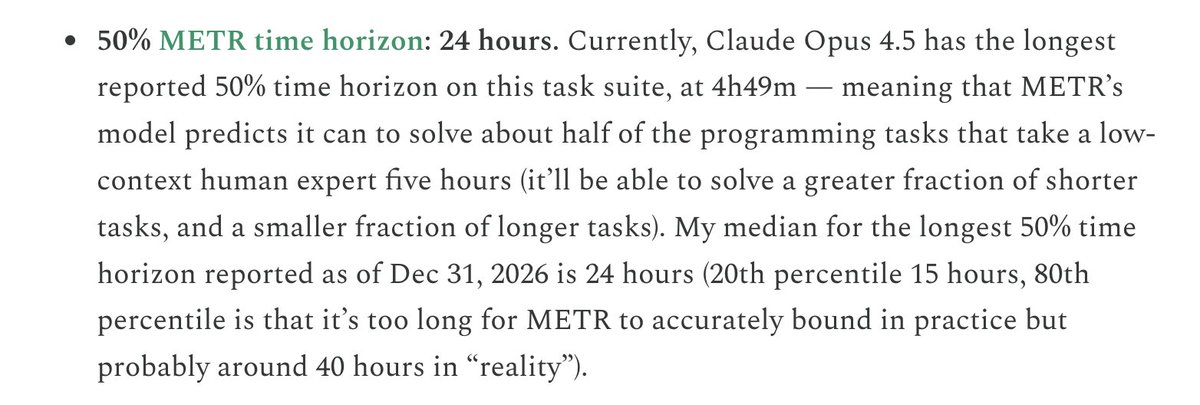
The next inflection point is employment data. If March payrolls continue the weakness Cramer highlighted, expect the "AI layoffs" narrative to solidify. JPMorgan CEO Jamie Dimon's suggestion that AI could shrink the work week to four days sounds utopian until you realize it also means 20% fewer hours — and paychecks. As @ajeya_cotra noted, "For the first time, I don't see solid evidence against AI R&D automation this year." That's not hype; it's a researcher admitting the timelines have compressed. If software engineering time horizons extend to 100+ hours as she now predicts, white-collar displacement accelerates sharply.
Europe offers a counterpoint: An ECB blog post found that AI hasn't cost jobs yet, with heavy users even adding staff. But that data is backward-looking. The question is whether firms will keep hiring once AI agents handle more complex work. Hedge fund founder Divya Nettimi predicts that within three to five years, funds will deploy fleets of AI bots researching and trading hundreds of stocks. If capital allocators no longer need human analysts, the ripple effects hit finance, media, consulting — every sector that pays knowledge workers premium wages. The market is split between those betting on a productivity boom and those pricing in a demand crisis. Right now, both narratives are live.